While watching the Life BBC Documentary (which I couldn't recommend more) I got totally awesome-ed by the hunting technique of the Bottlenose Dolphins. So, here's the video but please, please PLEASE if you have the opportunity, watch the whole series!
Other dolphin strategies are "fish whacking" which consists on hitting a fish with its fluke and knocking it out of the water and "Strand feeding" where dolphins kick the fish out of the water and into the shore where they retrieve them, which can be easily understood in the video below:
Showing posts with label Animals. Show all posts
Showing posts with label Animals. Show all posts
Saturday, September 3, 2011

Saturday, August 13, 2011
Animals have a shut down/freeze button
After minimal research, I arrived to the concussion conclusion that most of the animals have a shut down (or freeze) button. And here, some examples:
A cat..
A dog..
And finally, a sloth! Okay, I know there is a much more serious video proof of this, but this video made me laugh ;)
A cat..
A dog..
And finally, a sloth! Okay, I know there is a much more serious video proof of this, but this video made me laugh ;)
Tuesday, October 13, 2009
Wind-fed walking sculptures
While watching a science-divulgation spanish tv show called redes (sé que tengo demasiado tiempo libre), I remembered about Theo Jansen's kinetic sculptures.
An amazingly astonishing conference that I saw in ted.com which, by the way, is a fantastic site that gives you access to all kinds of talks.
I think it is completely worth it. So please, do not forget to press play and enjoy the wind-fed walking "animals".
An amazingly astonishing conference that I saw in ted.com which, by the way, is a fantastic site that gives you access to all kinds of talks.
I think it is completely worth it. So please, do not forget to press play and enjoy the wind-fed walking "animals".
Sunday, August 23, 2009
kiwi!
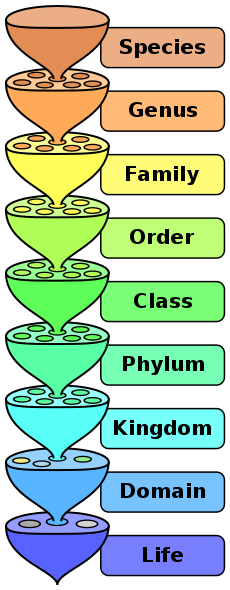 The bird who can't fly. It pertains to the genus Apteryx (from the greek a-pterux, meaning without-wing) from the Apterygidae family (there is only one genus, Apteryx, in Apterygidae family).
Kiwis pertain to the superoder Palaeognathae (emus, ostriches and relatives), which is particularly controversial since different relations for this superorder have been proposed and there has been disagreement between the kiwi position in it: the Apterygidae could be the sister group of all other ratities or only of emus and cassowaries (which means kiwis could have evolved from the same suborder emus and cassowaires evolved from).
For more info, see Paleognath Relationships from the Tree of Life Project, an awesome web you could spend years looking at.
There are 5 species of kiwis and all of them are in danger.
Enjoy the video :)
Saturday, August 22, 2009
El Río Amarillo y los delfines
Amarillo
El río más temido de China se llama Amarillo por la locura de un dragón o por la locura humana.
Antes de que China fuera China, el dragón K'au-fu intentó atravesar el cielo montado en uno de los diez soles que por entonces había.
Al mediodía, ya no pudo soportar ese fuego.
Incendiado de sol, loco de sed, el dragón se dejó caer sobre el primer río que vio. Desde las alturas se desplomó hasta el fondo y bebió toda el agua hasta la última gota, y donde el río había estado no quedó más que un largo lecho de barro amarillo.
Hay quienes dicen que esta versión no es seria. Y dicen que está históricamente comprobado que el río Amarillo se llama así desde hace unos dos mil años, cuando fueron asesinados los bosques vecinos que lo defendían de las avalanchas de nieve, barro y basura. Y entonces el río, que había sido verde como el jade, perdió su color y ganó su nombre. Y con el paso del tiempo, las cosas fueron empeorando, hasta que el río se convirtió en una gran cloaca.
En 1980, cuatrocientos delfines vivían allí. En el año 2004, quedaba uno. No duró mucho.
Extraído de "Espejos". Eduardo Galeano.
El color amarillo del río es debido al loes, un material geológico sedimentario de color amarillento, del que está formado el suelo de la Meseta de Loes , que antiguamente se caracterizaba por una gran fertilidad y que ahora, debido a la sobreexplotación, sufre un alto grado de desertización. Seguramente, debido a la localización de la meseta y a la deforestación que comenta Galeano, ese sea el motivo de que el loes bajara a través del río.
Pero el color Amarillo sigue siendo el menor de sus problemas: el río Amarillo fue el origen de desastrosas inundaciones en 1887, 1931. Y en 1938 sus aguas fueron usadas como arma en la Segunda Guerra Sino-Japonesa. Además, el alto grado de polución ha contaminado sus aguas (más de un tercio del río no puede ser usado por los agricultores ni con fines industriales).
 Su hermano gemelo, el río Yangtsé, pese a ser azul ha sufrido la misma suerte. Sus aguas han sido igualmente contaminadas y su hábitat destruído.
Los delfines chinos de río (Baiji) buena cuenta han dado de ello: fueron declarados especie extinguida en 2007 después de una laboriosa búsqueda de 6 meses a través del río Yangtsé.
Subscribe to:
Posts (Atom)